ASTROSAT-LAXPC
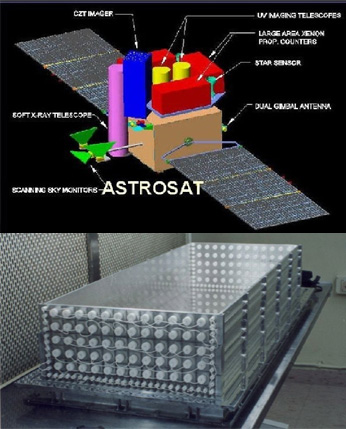
The LAXPC instrument is designed to have a large photon collection area in the broad energy range of 2-80 keV. In this broad energy band, the instrument is designed to have a high temporal resolution of 10 microsecond with similar absolute timing accuracy and moderate energy resolution. The high temporal resolution and large photon collection area will enable detailed study of high frequency features in X-ray light curves of bright and medium intensity point X-ray sources. However, to make use of such high sensitivity for intensity variation studies, it is necessary to measure, understand, and minimize systematic uncertainties in the timing response of LAXPC detectors and processing electronic units. In the Raman Research Institute, work on the timing and spectral calibration of the ASTROSAT-LAXPC instrument and development of the data reduction software is in progress at the X-ray astronomy laboratory. For further details on this project please click here or contact Prof. Biswajit Paul.
Detecting CMB Spectral Distortions

DISTORTION (Detection of Spectral signaTures of cOsmic baRyon evoluTION) is an experimental astronomy group at the Raman Research Institute, Bangalore, India. Our team brings together astronomers, graduate students, engineers and project students, all working towards the goal of building precise spectral radiometers to detect weak spectral distortions in the Cosmic Radio and Microwave Backgrounds arising from the Epochs of Recombination all the way to Reionization. The two experiments spearheading this effort are APSERa and SARAS. Click here for more...
Long wavelength astronomy with GMRT
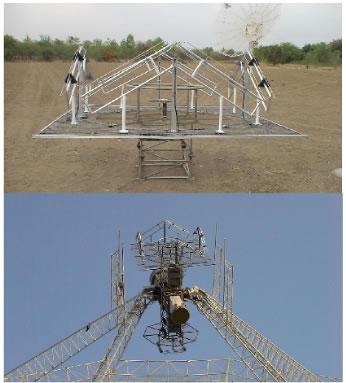
The Raman Research Institute has designed and developed dipole feeds working in the frequency range 30 - 90 MHz. Four antennas of the Giant Meterwave Radio Telescope (GMRT) were equipped with these broad-band low-frequency dipoles and test observations were carried out.
The top photograph shows the Low frequency Feed consisting of four 'V' folded dipoles in a boxing ring configuration. The lower picture shows the feed co-located with the existing 327MHz feed of GMRT. These preliminary observations indicate satisfactory performance of this new feed system. These dipoles extend the currently observable range of frequencies of 1420 - 150 MHz at the GMRT to lower frequencies. When all the 30 dishes of the GMRT are equipped with such dipoles, the GMRT will become the most powerful radio telescope working in this low frequency range of 30 - 90 MHz. Given the distribution of the 30 antennas at the GMRT, with a clustering of 14 antennas within 1 km and the remaining 16 spread over a distance of 25 km, images of the sky with a resolution of 1 arcmin and a sensitivity of 10 mJy/beam can be produced. Furthermore, such images will be unique in being sensitive to extended and low-surface brightness features in the sky. There is a rich variety of phenomena that can be explored with the GMRT at these low frequencies. Some of the largest gravitationally bound systems are Galaxy Clusters where as many as several hundreds of galaxies form bound systems over linear extents of ~ a few million light years.The medium between the galaxies is filled with relativistic electrons and magnetic field. The radiation from such a system, the synchrotron radiation, is of low surface brightness and is rather diffuse.
However, the intensity of the synchrotron radiation increases with decreasing frequency. GMRT at low frequencies will have the unique capabilities to discover such 'halos and relics' in Galaxy Clusters. Radio galaxies in which the central engine turned off a long time ago also tend to be extended and tend to have low-surface brightness. Without any recent energy input from the central engine (a black hole) the radiating relativistic electrons lose energy. Such 'tired' electrons pile up towards lower energies and produce low-frequency radio emission. GMRT at low-frequencies will be a powerful instrument in discovering such 'old remnants'.
Mauritius radio telescope
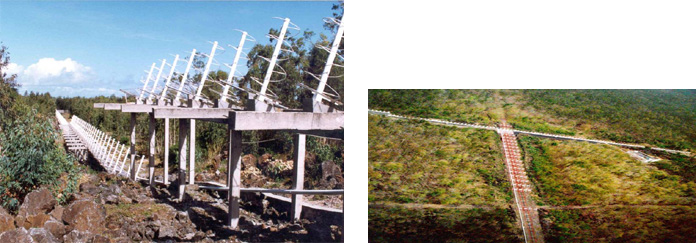
The Mauritius Radio Telescope (MRT) is a Fourier synthesis array, constructed and operated collaboratively by the Raman Research Institute, Indian Institute of Astrophysics, and the University of Mauritius. The telescope is situated at Bras d'Eau, in the north-east of Mauritius, an island in the Indian Ocean.
The telescope is a T-shaped non-coplanar array, consisting of 2048 m long East-West (EW) arm and an 880 m long South arm. In the EW arm 1024 helices are arranged in 32 groups; in the south arm, 16 trolleys with 4 helices each that move on a rail are used for synthesis.
A 512 channel, 2-bit 3-level complex correlation receiver is used to measure visibilities. At least 60 days of observations are required for obtaining the visibilities up to 880 m spacing. After calibration, the visibilities are transformed to adjust for the non-coplanarity of the array and to produce an image of the area of the sky under observation.
Molecular Astronomy

There are many small and large molecules in space, each sufficiently abundant and with many allowed dipole transitions. Yet, there exists only one survey of the Galactic plane with CO 1→0 transition at 8’ resolution. This survey has helped us understand the distribution of molecular clouds in our Galaxy and allowed us to choose different parts for more detailed studies. But, there is no Galaxy-wide temperature or density map of the molecular clouds. The main reason is the lack of survey speed in mm-wave telescopes, especially in spectral mode. Typically, mm-wave telescopes are single beam and therefore take much time to survey. Recently, multi-beam receivers are becoming available.
In this context it is prudent to ask, given N receivers, how best can they be deployed ? Fitting them as a focal-plane array to a single dish will allow one to make N simultaneous measurements. But, each output will also include receiver and sky-noise. Fitting them at the back of N smaller telescopes and making an N-element synthesis array will allow one to make N2/2 simultaneous measurements, thereby improving imaging speed. However, synthesis imaging misses short-spacing information, quite important at mm-wavelengths where the primary beam is quite small for even modest sized telescopes.
Efficient Linear-array Imager provides an alternative: it has good short-spacing response and, owing to its cross-correlation outputs, prevents self-noise and gain-variations from affecting the measurements. In addition, given N receivers, it makes N2/4 measurements, comparable to synthesis imaging.
A thin parabolic cylinder when coupled to a saddle-shaped secondary illuminated by a conical feed-horn, makes a fan-beam on the sky. A linear-array of such horns then will make an array of fan-beams. When two such fan-beam telescopes are placed orthogonal to each other in a cross configuration, they will make two sets of orthogonal fan-beams. By correlating the `row' and `column' fan-beam outputs, one can make a pencil beam that measures the signal from that `pixel'. This way, with 16 receivers one can make 64 pencil beams simultaneously.
RRI is constructing such a fan beam cross-telescope at its Gauribidanur field station. It will be equipped with a 7-14 GHz room temperature receivers. Six sub-bands, each 50 MHz wide that can be placed anywhere in the RF band, will be down-converted to a common IF, amplified, digitised and cross-correlated to make the 64 beams in each of the sub-band. The primary aim is to undertake a survey of the Galactic plane in multiple lines (e.g. CH3OH, OCS, SiS, HC3N and CH3CN) in this band and use them to make a temperature and density map of the Galaxy for the first time.
Murchison Widefield Array
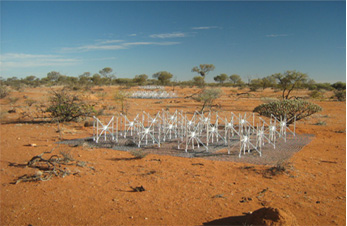
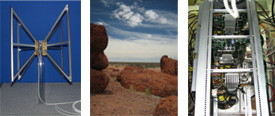
Far from cellphones and TV and FM stations, RRI astronomers and engineers have teamed up with partners in the US and Australia to create a new long wavelength radio telescope – the Murchison Widefield Array. The MWA radio telescope or the Murchison Widefield Array radio telescope located in Murchison Shire in the Australian outback is an array of antennas arranged as square ‘tiles’ consisting of a total of 2048 dual-polarization wide-band ‘bow-tie shaped’ antennas that operate in the frequency range 80-330 MHz. The MWA has already begun gathering weak radio signals from deep space that are being analysed by astronomers at RRI and in the US and Australia using massively parallel computing systems. The data is expected to provide an insight into the dramatic evolution experienced by primordial cosmic gas as the first stars and galaxies formed in the early universe. That apart, MWA data will help study structure of the intergalactic gas in our Milky Way galaxy and galaxies beyond, and the influence of the Sun on inter-planetary weather close to Earth.Click here to know more.
NAVigation satellite position measurement

This indigenous prototype system will be proof of concept for the measurement of satellite state vector components with rms accuracies close to 0.001 degree and 1 mm/s. The range will be available from a WAAS-enabled GPS receiver, and bright celestial radio sources will be used for the continuous calibration of the system. The dynamic measurement of instanta neous orbits of satellites is one of the main requirements of a navigation satellite system like SNP. The reliability of such measurements is limited by the accuracies with which the ground systems can measure range and angles of the satellites. To know more about this Project, please contact Prof. C.R. Subrahmanya.
Polarized X-rays from space
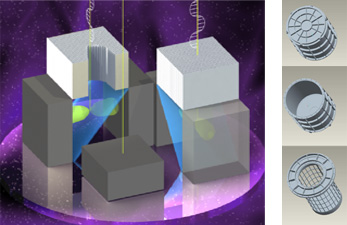
RRI astronomers are developing methods of detecting polarized X-rays from celestial bod ies – to build X-ray instruments that can detect polarized X-rays, which will be launched into space, and open new eyes to celestial phenomena. Click here to know more or contact Prof. Biswajit Paul.
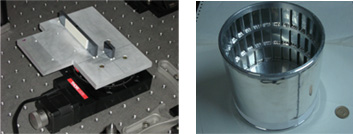
RRI receivers on GBT
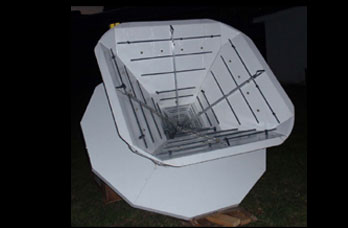
The Green Bank Telescope is operated by the US National Radio Astronomy Observatory. It is a 100-m fully steerable parabolic antenna that is the largest fully steerable antenna in the world. RRI has designed and built a dual-polarization wide-bandwidth feed covering 100-1500 MHz and a multi channel receiver that has been installed on the GBT. Pulsars were observed with the RRI receiver on GBT with the science goal of making simultaneous high time and spectral resolution studies of pulsar emission at single-pulse level, opening possibility of tomography study of pulsar emission cone.Click here for more.For further de tails, contact Prof. Avinash Deshpande.
Indian SWAN (Sky Watch Array Network): A statergic Initiative
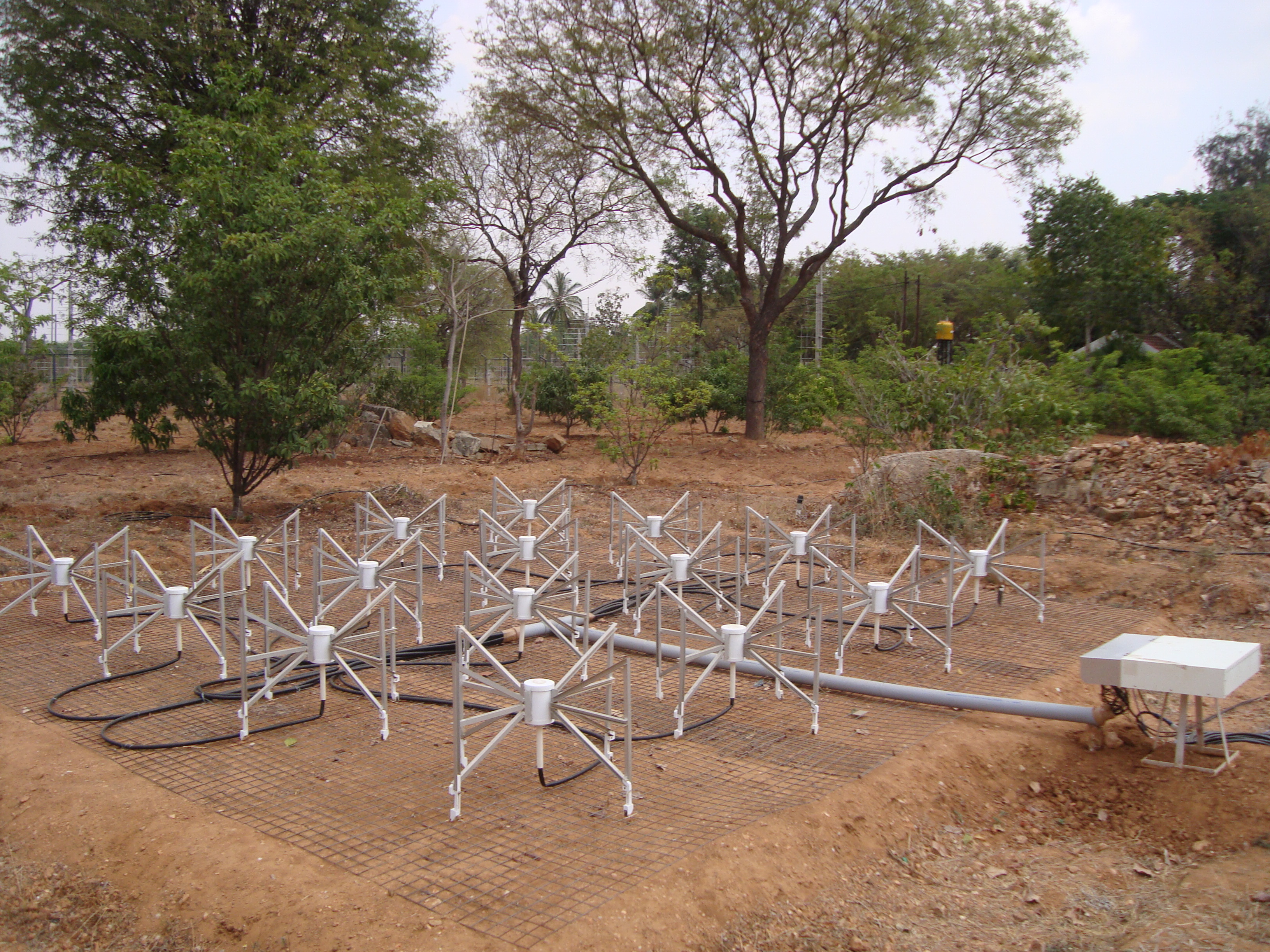
RRI astronomers are designing and developing a broadband Sky Watch Array Network across India with the following objectives: 1) To facilitate and conduct searches and studies of fast (typically of sub-second duration) and slow transient radio radiation originating from astronomical sources. 2) To facilitate and conduct high angular resolution imaging of discrete galactic and extragalactic sources at low radio frequencies. 3) To train, involve and provide hands-on experience to a large number of undergraduate and postgraduate students in all aspects of the SWAN, through their direct and active participation starting from the design stage to research using the array network. Click here to know more. For further details contact Prof Avinash Deshpande. SWAN Poster