Hema Ramachandran Lecture
Catch me if you can: Chasing the Neutrinos
Speaker: Prof. Srubabati Goswami (Physical Research Laboratory (Retired), Ahmedabad. )
Date and time
Webinar link
Venue
RRI Auditorium
Abstract
Neutrinos are among the most elusive particles in the universe — abundant yet barely interacting, passing through matter almost undetected. This talk will describe the adventurous trail that leads deep underground into abandoned mines, beneath kilometres of Antarctic ice, and under the Mediterranean sea to catch these invisible particles. It will explore how these incredible detectors work, why such extreme locations are necessary, and what discoveries they have enabled—from neutrino oscillations to multi-messenger astronomy.
Poster
Short Biography
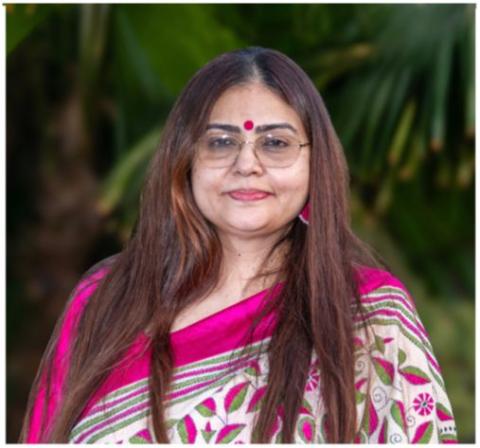
Professor Srubabati Goswami retired as an Outstanding Professor from the Physical Research Laboratory, Ahmedabad, in 2026 and is now an honorary faculty member there. She works on particle and astroparticle physics with an emphasis on neutrino physics. She was instrumental in establishing an internationally acclaimed Indian Neutrino Group, doing analysis of neutrino oscillation data. Later, she diversified into probing physics beyond the Standard Model of particle physics with neutrinos and has published more than 100 papers in peer-reviewed journals. She has been invited to give plenary talks at major international conferences. She was a member of the India-based Neutrino Observatory Collaboration and is currently a member of the DUNE collaboration. She is an elected fellow of all three science academies in the country – IAS, INSA, and NASI – as well as the World Academy of Sciences. She has received several prestigious awards, including the Humboldt Fellowship, J.C. Bose Fellowship, and Fulbright-Nehru Academic and Professional Excellence Fellowship. Currently, she is the President of the Indian Physics Association. She is a strong advocate for women in science and previously chaired the Gender in Physics working group of the Indian Physics Association.