Special Colloquium
High precision waveforms with the small mass ratio limit and the future of gravitational-wave source modelling
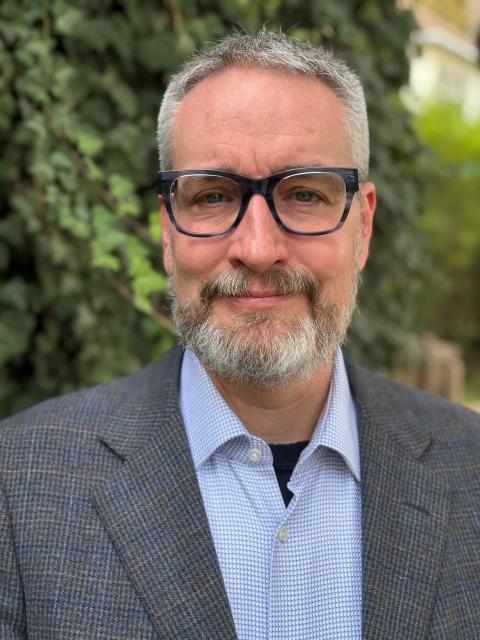
Speaker: Professor Scott A. Hughes (MacVicar Faculty Fellow, Associate Department Head (Aug 2025 — July 2026), Department of Physics & MIT Kavli Institute, Massachusetts Institute of Technology, USA)
Ground-based gravitational-wave detectors have now measured well over 200 events since the first detection in 2015. Augmenting this catalog with the strong evidence for very-low-frequency waves measured using precision pulsar timing makes it clear that the long promised field of gravitational-wave astronomy has become reality. Where does the field go from here? The road ahead will be driven on the facility side by improved instrumentation: more instruments with greater sensitivity, wider bandwidth, and expansion into other frequency bands. On the theory side, taking advantage of instrumental improvements will require a focus on precision modeling. We expect the complexity of the measured signals as detectors probe more deeply, and capture more wave cycles in their sensitive bands. Precision modeling will be particularly important to ensure we are not confused by systematic errors, particularly as various effects we hope to measure have the potential to “mock up” effects similar to what we might see in non-GR-based gravity analyses. This talk will discuss in particular how the small-mass-ratio limit enables us to understand systematics in waveform models and how they influence our ability to learn about strong gravity and astrophysical sources from these events.