Colloquium
Marginally stable economies?
Speaker: Jean-Philippe Bouchaud (Capital Fund Management and French Academy of Sciences)
Will a large economy be stable? Building on Sir Robert May’s original argument for large ecosystems, we conjecture that evolutionary and behavioural forces conspire to drive the economy towards marginal stability. We study networks of firms in which inputs for production are not easily substitutable, as in several real-world supply chains. We argue that such networks generically become dysfunctional when their size increases, when the heterogeneity between firms becomes too strong, or when substitutability of their production inputs is reduced. At marginal stability and for large heterogeneities, we find that the distribution of firm sizes develops a power-law tail, as observed empirically. Crises can be triggered by small idiosyncratic shocks, which lead to “avalanches” of defaults characterized by a power-law distribution of total output losses. This scenario would naturally explain the well-known “small shocks, large business cycles” puzzle, as anticipated long ago by Bak, Chen, Scheinkman, and Woodford.
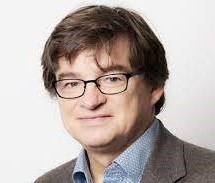
Professor Bouchaud graduated from the Ecole Normale Supérieure in Paris, where he also obtained his Ph.D. in physics. Subsequently, he worked in the CNRS, the Cavendish Laboratory (Cambridge), and the Service de Physique de l’Etat Condensé (CEA-Saclay). He became interested in economics and theoretical finance in 1991. His work covers the physics of disordered and glassy systems, granular materials, the statistics of price formation, stock market fluctuations, and the modeling of financial risks. He was awarded the IBM young scientist prize in 1990, the CNRS. Silver Medal in 1996, Risk Quant of the Year in 2017.